
Best Soil for Container Gardening: Why Soil Quality Determines Nutrient Density
The Urban Metabolic Garden Series
This article is part of The Urban Metabolic Garden, a February blog series exploring how small-space gardening, soil quality, and food environments directly influence blood sugar regulation, insulin sensitivity, and metabolic health. Throughout the month, I’m publishing one new blog each day to show how even apartments, condos, balconies, and indoor spaces can be used to support metabolic safety, without land, perfection, or overwhelm. Each post builds on the last, connecting soil → plant → plate → physiology, so you can understand not just what to do, but why it works.
If Your Food Isn’t Nourishing You, It’s Not a Willpower Problem
Many people come to me saying some version of this:
“I eat well. I buy vegetables. I cook at home. Why does my body still feel off?”
Low energy.
Persistent cravings.
Blood sugar swings that don’t make sense.
What most people don’t realize is this:
Food quality isn’t just about the food, it’s about the soil the food was grown in.
And when soil quality drops, nutrient density drops with it, even if the food still looks healthy on the outside.
This matters deeply for insulin signaling, metabolic health, and why so many people feel undernourished while technically eating “well.”
Soil Is the First Step in Blood Sugar Regulation (Even Before the Plate)
From a metabolic perspective, insulin sensitivity depends on adequate intake of:
Magnesium
Zinc
Chromium
Potassium
Polyphenols and phytonutrients
Plants don’t create these nutrients out of thin air.
They extract them from the soil.
If the soil is depleted, compacted, or chemically damaged, the plant grows but the nutrient profile is weaker.
That means:
Less mineral content
Less blood sugar buffering
Less metabolic support from the same foods
This is one of the most overlooked reasons people struggle with insulin resistance despite “doing everything right.”
What Happened to Our Soil (And Why Food Is Less Nutritious Than It Used to Be)
Traditional industrial agriculture has focused on yield, not nutrition.
Over decades, this has led to:
Monocropping
Heavy synthetic fertilizer use
Reduced microbial diversity
Soil erosion and compaction
Plants are now grown in soils that often lack:
Living microbes
Organic matter
Trace minerals
As a result, modern produce can contain significantly fewer nutrients than the same foods grown generations ago.
This is why:
Vegetables don’t feel as satisfying
People crave more food but feel less nourished
Blood sugar feels harder to stabilize
It’s not just what you’re eating.
It’s what the plant had access to while growing.
Why Container Gardening Gives You Back Control
Here’s the upside.
When you grow food in containers, you:
Choose the soil
Control nutrient inputs
Protect soil biology
Improve nutrient density intentionally
Even one container can outperform grocery store produce grown in depleted agricultural land.
This is where your balcony garden becomes a metabolic intervention, not a hobby.
The Best Soil for Container Gardening (Beginner-Friendly)
Container plants rely entirely on the soil you give them.
There’s no fallback.
That’s why soil choice matters more in containers than in ground gardens.
What to Look for in Quality Container Soil
A good container mix should include:
Organic matter (compost or worm castings)
Proper drainage (not compact or muddy)
Moisture retention without waterlogging
Living biology, not sterile filler
Look for labels that say:
“Organic potting soil”
“Contains compost”
“Living soil”
Avoid cheap mixes that are mostly peat with no nutrition added.
Why Compost and Worm Castings Matter for Nutrition
Compost isn’t just plant food.
It’s microbial food.
Healthy soil microbes:
Increase mineral availability
Improve root absorption
Enhance phytonutrient production
This translates directly to:
More magnesium in leafy greens
Better potassium content
More antioxidant activity
Which supports:
Insulin signaling
Nervous system regulation
Reduced cravings driven by mineral depletion
How to Upgrade Any Store-Bought Soil (In 5 Minutes)
Even if you already bought soil, you can improve it.
Add:
Worm castings (10–20%)
Organic compost
A small amount of organic mineral blend if available
Mix gently — don’t overwork it.
You’ve just turned basic soil into nutrient-supportive growing media.
What This Means for Grocery Store Food (And Why Awareness Matters)
You don’t need to panic about groceries.
But awareness changes how you eat.
When you understand soil quality:
You stop blaming yourself for cravings
You recognize why volume doesn’t equal nourishment
You prioritize quality where possible
This is also why:
Homegrown greens often taste stronger
You feel more satisfied eating them
Smaller portions go further
Your body recognizes real nutrition.
Soil-to-Plate Is Metabolic Strategy, Not Gardening Trivia
This is the missing link between:
“I eat healthy”
“Why doesn’t my blood sugar cooperate?”
Nutrition starts before the seed is planted.
And when you support soil health, you support:
Plant health
Human health
Metabolic resilience
Even one container with high-quality soil can change the nutritional value of your meals.
Want Support Beyond the Garden?
Growing nutrient-dense food is powerful.
But if you’re dealing with:
Ongoing sugar cravings
Energy crashes
Weight gain resistant to healthy eating
Insulin resistance or prediabetes
Then food quality is only one piece of the system.
The Sugar Reset Method
My 15-week metabolic balance program helps women:
Stabilize insulin first
Reduce cravings at the physiological level
Support hormones as a downstream effect
Build sustainable metabolic safety
This is not about restriction.
It’s about restoring function.
👉 Book a discovery call to see if The Sugar Reset Method is right for you
👉 Learn how to support your metabolism with a strategy that actually works
Your health doesn’t start in the kitchen.
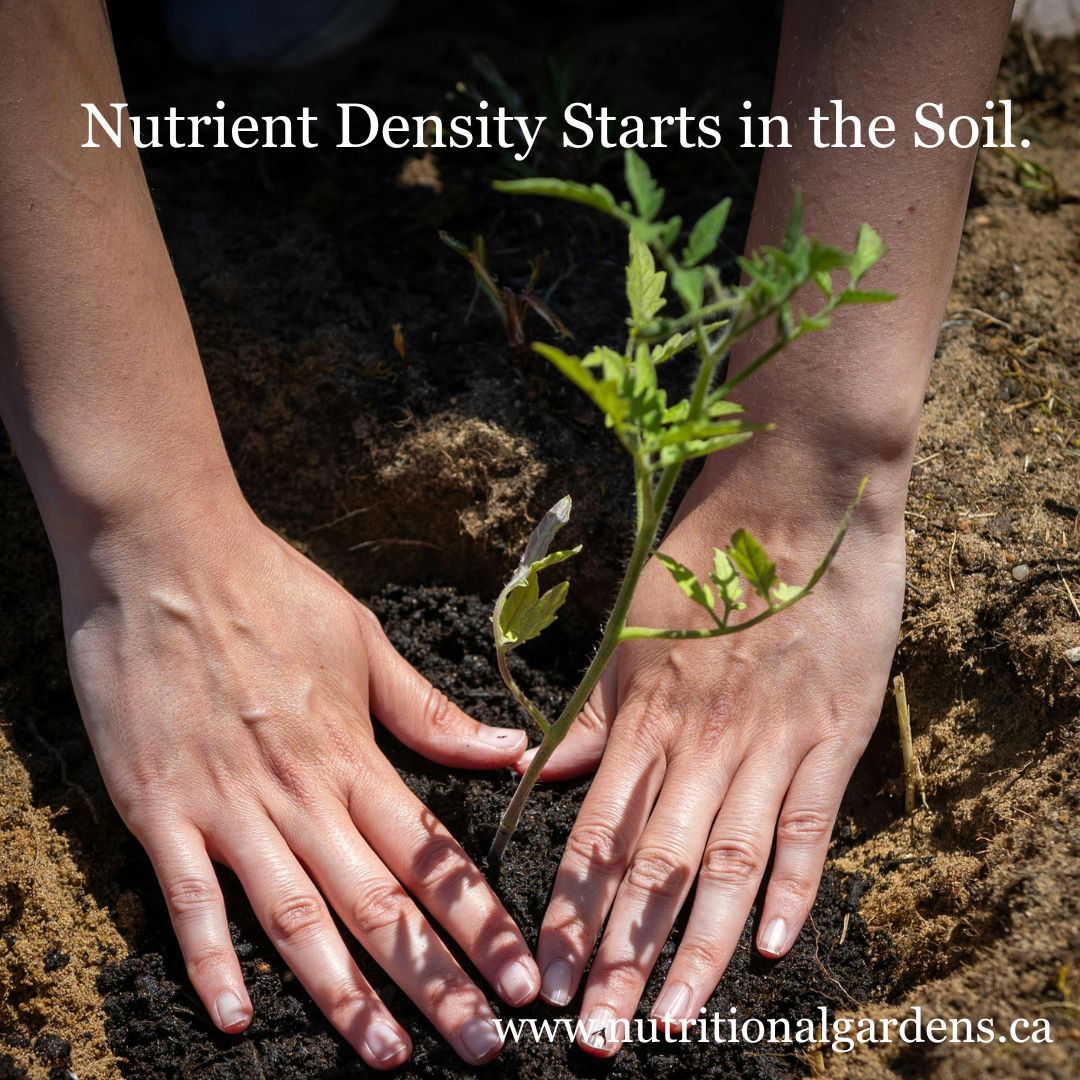
It starts in the soil.
To Your Health,
Sarah Seguin
NUTRITIONAL GARDENS
Certified Nutrition Practitioner
Metabolic Balance Coach
Horticulturist