
Low Glycemic Fruits You Can Grow in Containers
Fruit does not have to spike insulin
The Urban Metabolic Garden Series
This article is part of The Urban Metabolic Garden, a February blog series exploring how small space gardening, soil quality, and food environments directly influence blood sugar regulation, insulin sensitivity, and metabolic health. Throughout the month, I am publishing one new blog each day to show how even apartments, condos, balconies, and indoor spaces can be used to support metabolic safety, without land, perfection, or overwhelm. Each post builds on the last, connecting soil to plant to plate to physiology, so you can understand not just what to do, but why it works.
Fruit Is Not the Problem. Context Is.
Fruit is often blamed when blood sugar feels unstable.
Too sweet.
Too many carbs.
Too risky if you have insulin resistance.
But physiologically, fruit itself is not the issue. The issue is dose, fiber content, and metabolic context.
When fruit is eaten without fiber, protein, or mineral support, glucose rises quickly. When fruit is eaten in appropriate portions, with fiber intact, and within a metabolically supportive environment, it behaves very differently in the body.
This is where low glycemic fruits grown at home become powerful.
What Low Glycemic Actually Means
Low glycemic does not mean sugar free.
It means that glucose enters the bloodstream slowly enough for insulin to manage it effectively.
Low glycemic fruits tend to have:
Higher fiber content
Lower total sugar per serving
Polyphenols that improve insulin sensitivity
Water content that increases satiety
When grown at home and harvested ripe, these benefits are amplified.
Why Growing Fruit Changes the Blood Sugar Equation
Store bought fruit is often:
Harvested early
Transported long distances
Bred for sweetness over resilience
This can reduce fiber quality and shift the sugar to fiber ratio.
When you grow fruit in containers:
You harvest closer to ripeness
You preserve fiber structure
You control soil quality and mineral content
This improves how the fruit interacts with your blood sugar.
The Best Low Glycemic Fruits for Container Growing
These fruits are realistic for balconies and small spaces in Canada and align well with insulin first nutrition.
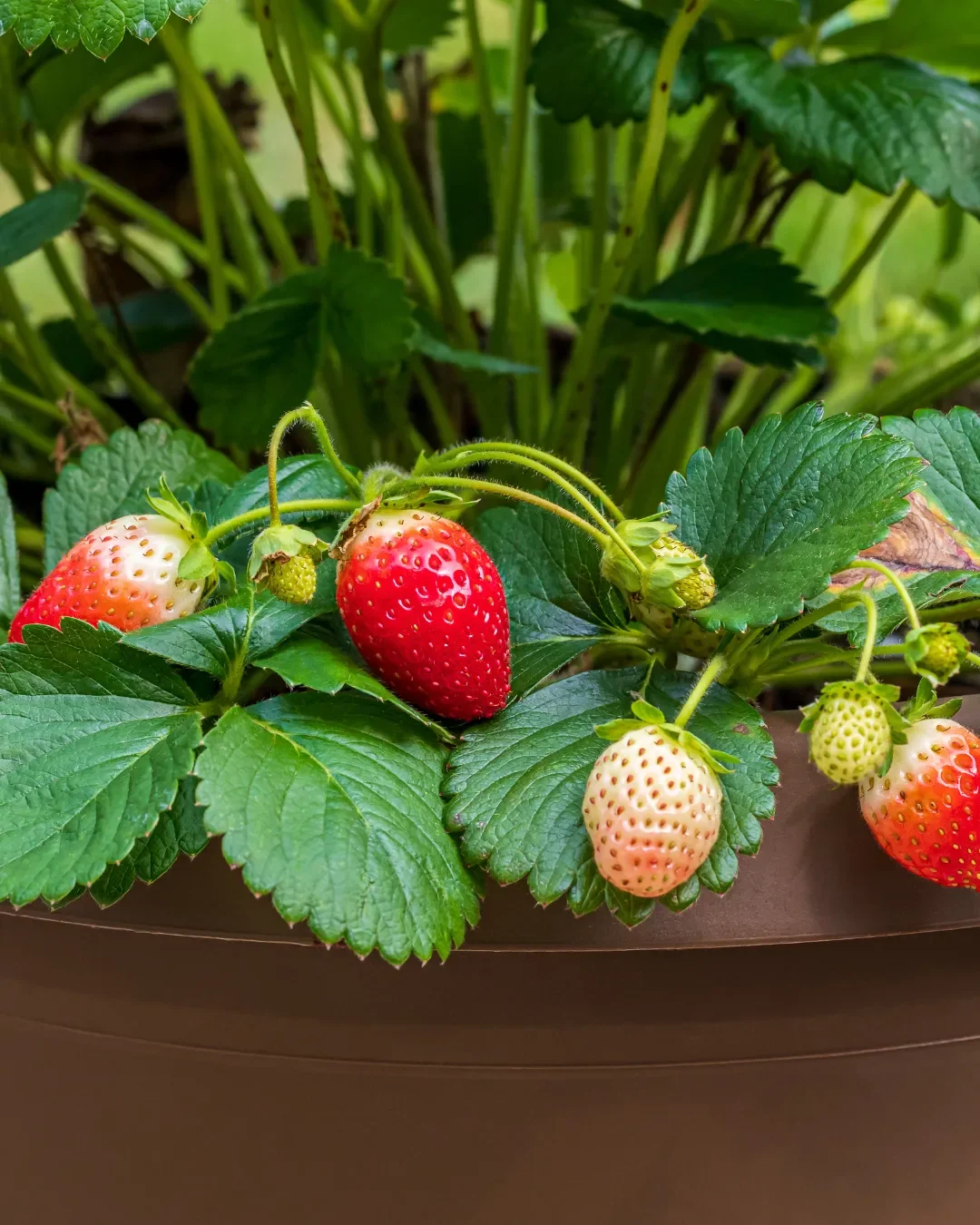
Strawberries
Strawberries are one of the lowest glycemic fruits available and grow exceptionally well in containers.
They provide:
Fiber that slows glucose absorption
Polyphenols that support insulin sensitivity
Vitamin C for stress regulation
They can be grown in hanging baskets, window boxes, or shallow pots and produce well in cool climates.
A small serving paired with protein does not spike blood sugar for most people.
Raspberries
Raspberries are extremely high in fiber relative to their sugar content.
They support:
Improved glucose handling
Gut bacteria that influence insulin signaling
Satiety and satisfaction
Raspberries can grow in containers with adequate depth and support. Dwarf or compact varieties are ideal for balconies.
Blackberries
Blackberries have a similar fiber profile to raspberries and are excellent for blood sugar balance.
They grow well in containers with pruning and benefit from consistent watering.
Their deep color signals high antioxidant content which supports metabolic resilience.
Blueberries
Blueberries are slightly higher in sugar but offer powerful polyphenols that improve insulin sensitivity.
When eaten in small portions and paired with protein or fat, blueberries can support blood sugar stability rather than disrupt it.
Compact blueberry varieties are well suited to containers, especially when grown in acidic soil.
Tomatoes as a Fruit Option
Botanically, tomatoes are fruit and metabolically they behave like vegetables.
They are low glycemic, high in antioxidants, and grow extremely well in containers.
Cherry and patio varieties are especially well suited to balcony growing and support blood sugar through fiber and phytonutrient intake.
Why Portion and Pairing Matter More Than Avoidance
Fruit becomes problematic when it is eaten:
Alone
In large quantities
Without fiber or protein
When fruit is paired with:
Greek yogurt
Nuts or seeds
Cottage cheese
Eggs or protein rich meals
Blood sugar response is significantly improved.
Growing fruit at home naturally encourages smaller portions and more mindful use.
Soil Quality Still Matters for Fruit
Just like vegetables, fruit nutrient density depends on soil health.
Quality soil improves:
Fiber development
Mineral uptake
Plant resilience
When fruit is grown in depleted soil, sugar content increases relative to nutrients.
This is another reason homegrown fruit behaves differently metabolically.
Growing Fruit in Containers Without Overwhelm
You do not need a large setup.
Basic requirements:
Large enough containers
Good drainage
Organic soil with compost
Consistent watering
Fruit plants reward consistency more than perfection.
The Psychological Side of Growing Fruit
There is also an emotional layer that matters.
Many people feel fear around fruit because of blood sugar messaging.
Growing fruit:
Restores trust in food
Encourages moderation naturally
Reduces all or nothing thinking
This matters because stress hormones raise blood sugar independently of food.
Fruit and Insulin Resistance Can Coexist
If you have insulin resistance, fruit does not need to be eliminated.
It needs to be:
Chosen strategically
Portioned intentionally
Supported by fiber and protein
Container grown fruit allows you to reintroduce fruit safely and confidently.
When Fruit Cravings Are a Signal
Cravings for fruit often indicate:
Low mineral intake
Inadequate fiber
Blood sugar dips
Responding with low glycemic, fiber rich fruit is often more supportive than avoiding fruit altogether.
Your Balcony as a Metabolic Filter
When food grows where you live:
Choices slow down
Portions regulate naturally
Quality improves automatically
This is how environments support metabolism without constant effort.
If Blood Sugar Still Feels Unstable
Fruit choice is one piece of the system.
If you experience:
Persistent cravings
Energy crashes
Weight gain resistant to healthy eating
Blood sugar instability
Then your body needs structured metabolic support.
Start With the 7 Day Sugar Reset Guide
If you want a clear and gentle starting point, the 7 Day Sugar Reset Guide walks you through:
Stabilizing blood sugar without restriction
Choosing foods that support insulin signaling
Reducing cravings by addressing physiology
Building meals that actually satisfy
👉 Download the 7 Day Sugar Reset Guide
👉 Learn how to work with your metabolism instead of fighting it
Fruit does not have to spike insulin.
When chosen wisely and grown intentionally, it can support blood sugar stability.
Ready for Real, Lasting Change
Growing food that supports blood sugar is a powerful step.
But if you are ready for deep, lasting metabolic change, food choices alone are not always enough.
If you are experiencing:
Ongoing sugar cravings
Energy crashes
Weight gain that does not respond to healthy eating
Blood sugar instability or insulin resistance
Then your body is asking for structured support, not more willpower.
The Sugar Reset Method
The Sugar Reset Method is my 15 week metabolic balance program designed to:
Stabilize insulin first
Reduce cravings at the physiological level
Support hormones as a downstream effect
Restore metabolic safety so your body can respond again
This program is not about restriction or perfection. It is about understanding what your body needs and giving it the right signals consistently.
If you are ready to stop starting over and want a strategy that actually works with your biology, this is the next step.
👉 Join The Sugar Reset Method here
You do not need to fight your body.
You need to support it.
To Your Health,
Sarah Seguin
NUTRITIONAL GARDENS
Certified Nutrition Practitioner
Metabolic Balance Coach
Horticulturist