
The Nighttime Sugar Craving Cycle and How to Break It
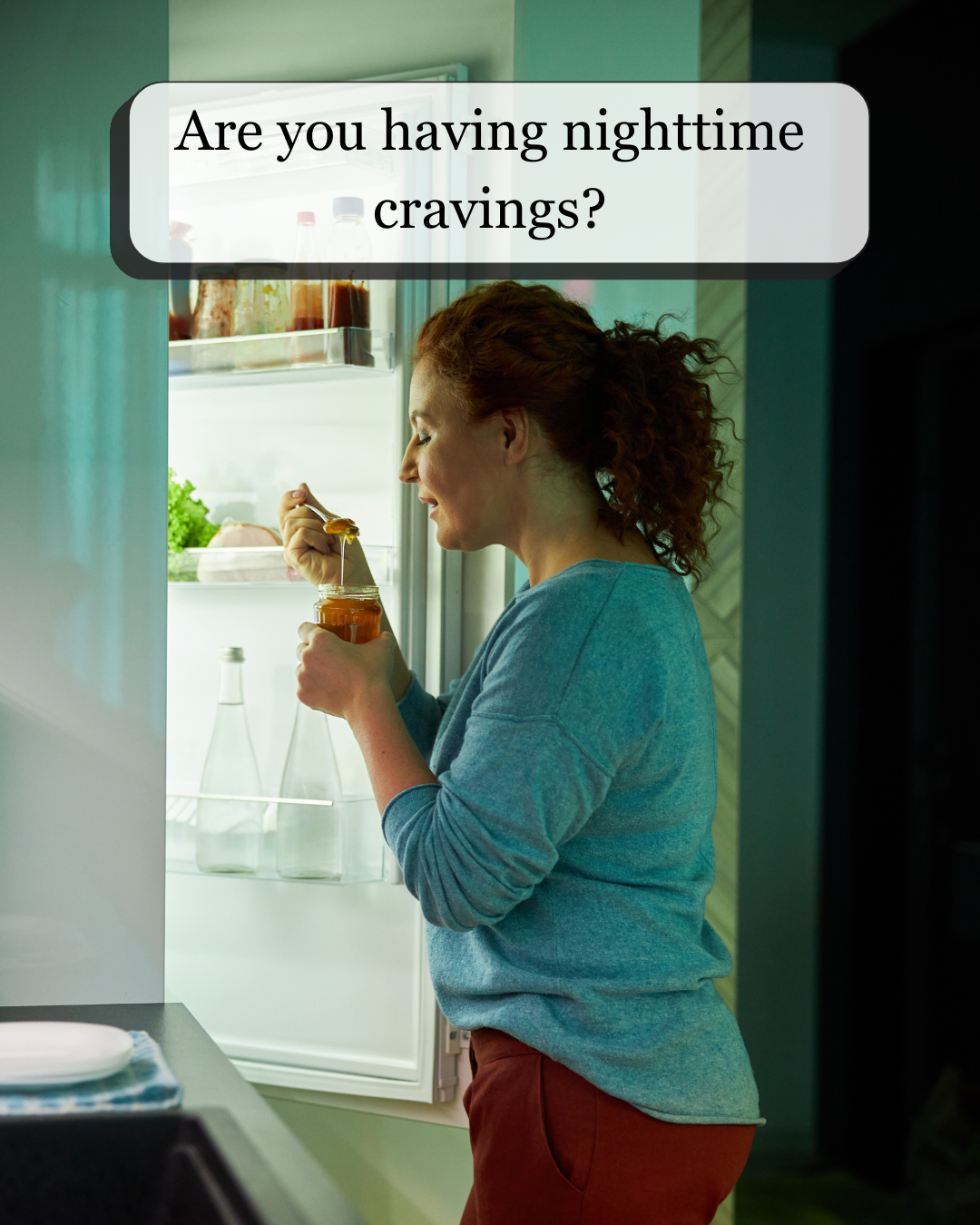
If sugar cravings hit hardest at night, your body is not lacking discipline.
It is communicating.
Nighttime cravings are one of the clearest signs of blood sugar instability, nervous system overload, and cortisol driven metabolism. They are not random, and they are not a personal failure. They are predictable physiological responses to how the day was structured, how blood sugar was supported or not supported, and how the body is attempting to keep itself safe by the evening.
Many women tell me the same thing.
They feel “fine” during the day.
They eat reasonably well.
They hold it together.
Then nighttime hits.
Suddenly the urge for sugar feels urgent, loud, and non negotiable.
This is not willpower disappearing at night. This is delayed metabolic feedback.
Why nighttime cravings are so common in women
The body prioritizes survival first. If blood sugar has been unstable all day, or if cortisol has been doing most of the work of keeping energy available, the nervous system eventually demands fast fuel.
Nighttime is when cortisol should naturally drop. Melatonin should rise. Blood sugar should remain steady enough to allow the body to rest.
When this does not happen, cravings step in as a backup system.
Sugar raises blood glucose quickly.
It temporarily lowers cortisol.
It provides fast nervous system relief.
Your body is choosing the fastest available tool.
That is why nighttime cravings feel different from daytime cravings. They are not casual. They feel urgent because the system is depleted.
The cortisol blood sugar loop
One of the biggest drivers of nighttime sugar cravings is elevated evening cortisol.
Cortisol is meant to rise in the morning and fall as the day progresses. When blood sugar is unstable, cortisol stays elevated longer to keep glucose available.
This creates a loop:
Low or unstable blood sugar earlier in the day
Leads to elevated cortisol
Elevated cortisol disrupts normal insulin signaling
Disrupted insulin signaling worsens blood sugar control
By evening, the body is exhausted and demands sugar
This is why simply avoiding sugar at night rarely works. The craving was built earlier.
Under fueling earlier in the day
Many women unintentionally under fuel during the day.
They skip breakfast.
They eat light lunches.
They rely on coffee to push through.
By evening, the body calculates the deficit.
Nighttime cravings are often the body correcting what was missed earlier. This is especially true when protein, fiber, and minerals are insufficient.
Blood sugar stability is cumulative. It is not created at dinner alone.
The role of insulin resistance
When insulin signaling is impaired, glucose does not enter cells efficiently. This means blood sugar can look normal or even high, while cells are starving for fuel.
The brain senses this mismatch and demands fast carbohydrates. At night, when cognitive restraint is lower, this signal feels overwhelming.
This is not a lack of discipline. It is a cellular fuel problem.
Why nighttime cravings intensify during perimenopause
Hormonal shifts increase sensitivity to blood sugar fluctuations. Estrogen plays a role in insulin sensitivity, cortisol regulation, and serotonin production.
As estrogen fluctuates, blood sugar stability becomes harder to maintain. Evening cravings often intensify during this stage because the nervous system has less buffering capacity.
This is why restriction based approaches often backfire during perimenopause. The body perceives them as threats.
How to break the nighttime sugar craving cycle
Breaking the cycle does not start at night. It starts earlier in the day.
1. Stabilize blood sugar at breakfast
Skipping breakfast or eating carbohydrate heavy breakfasts without protein and fat increases cortisol. A blood sugar supportive breakfast reduces stress hormones and sets the tone for the day.
Protein is non negotiable here.
2. Eat enough during the day
Adequate calories, especially from protein, fiber, and fat, reduce nighttime compensation eating. Your body keeps a running tally.
3. Add minerals before removing sugar
Mineral depletion increases cravings. Magnesium, potassium, and sodium all play roles in insulin signaling and nervous system regulation.
This is why food grown in mineral rich soil and bitter greens are so powerful. They nourish the system that regulates cravings.
4. Support the nervous system in the evening
Blood sugar and nervous system regulation are inseparable. Evening routines that signal safety help cortisol drop.
Warm meals.
Adequate carbohydrates paired with protein.
Gentle light exposure.
This is physiology, not mindset.
5. Do not rely on restriction
Restriction increases cortisol. Cortisol increases cravings. This is not a coincidence.
The goal is metabolic safety, not control.
Nighttime cravings are information
When cravings show up consistently at night, they are not random. They are revealing how your metabolism experienced the day.
Instead of asking how to stop cravings, ask what your body needed earlier.
This is where insulin first nutrition changes everything.
Ready to stop fighting nighttime cravings?
If nighttime sugar cravings are showing up consistently, your body is asking for metabolic support, not more restriction.
This is exactly what we address inside my 15 week Metabolic Balance Program.
We focus on stabilizing insulin, rebuilding blood sugar capacity, and restoring metabolic safety so cravings quiet naturally, energy steadies, and food stops feeling like a nightly battle.
You do not need more willpower.
You need a system that works with your physiology.
If you are ready to stop reacting to cravings and start understanding what your body actually needs, you can learn more about the program and what is included at www.nutritionalgardens.ca.
To Your Health,
Sarah Seguin
NUTRITIONAL GARDENS
Certified Nutrition Practitioner
Metabolic Balance Coach
Horticulturist