
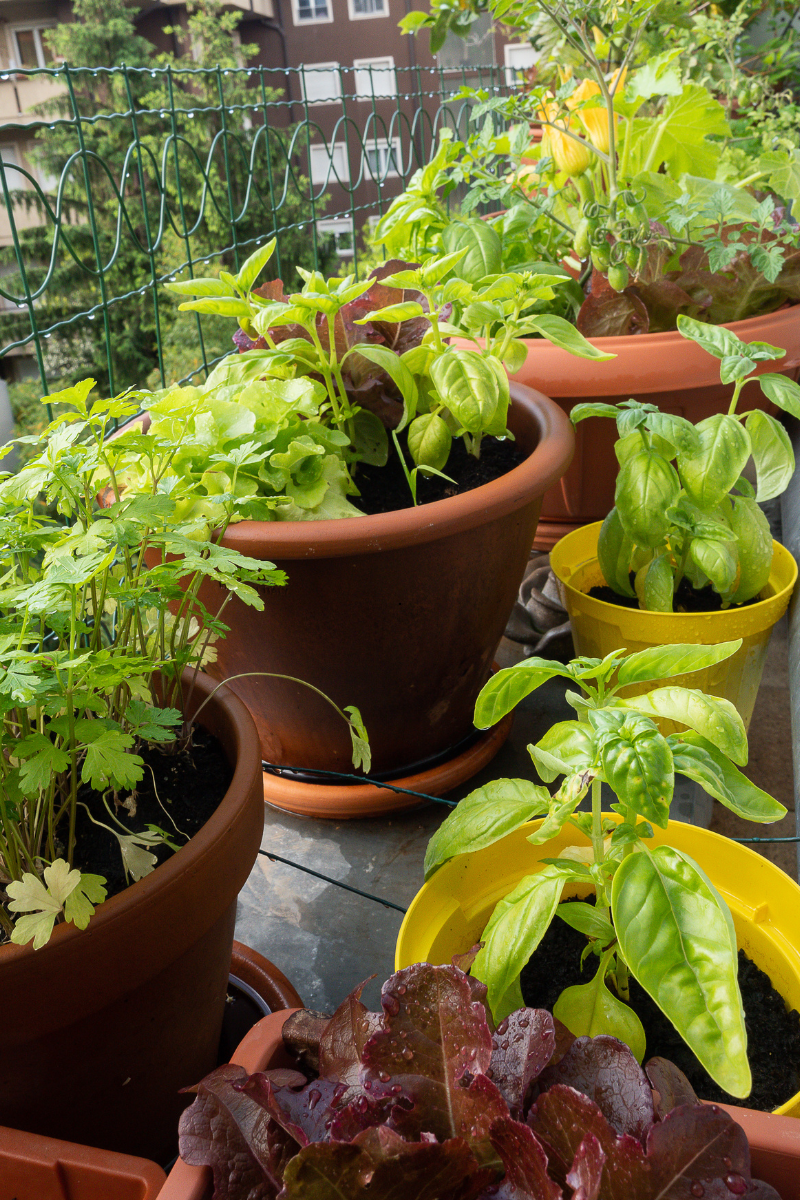
Small Space Gardening: Start a Balcony Food Garden in 60 Minutes
You Don’t Need More Willpower. You Need a Better Food Environment
Most people assume better blood sugar control starts with motivation.
More discipline.
More rules.
More “starting again on Monday.”
But metabolically speaking, willpower is one of the weakest tools we have.
Blood sugar stability is not just about what you eat, it’s about how easy it is to access the foods that stabilize insulin in the first place.
And this is where small space gardening becomes quietly powerful.
If you live in an apartment or condo, your balcony (or even a bright window) can become a metabolic support system. One that works with your physiology instead of against it.
You don’t need land.
You don’t need a green thumb.
You don’t need an entire weekend.
If you have 60 minutes, you can change your food environment in a way that meaningfully supports blood sugar regulation.

Container Gardening for Beginners
For the month of February, this Urban Metabolic Garden series is about showing you how everyday environments quietly shape blood sugar, insulin sensitivity, cravings, and energy, often without you realizing it.
Especially if you live in an apartment, condo, or somewhere without a traditional yard.
I hear this all the time.
“I’d love to grow food, but I don’t have land.”
“I live in a condo, so gardening isn’t really an option.”
“I’ll focus on food choices instead.”
Here’s the truth.
You don’t need land to grow insulin supportive food.
You just need a container, a bit of intention, and an understanding of how small systems can make a big difference metabolically.
Yesterday, we talked about how a balcony garden can support blood sugar stability by making fibre rich foods easier to eat and by calming the nervous system.
Today, I want to make this practical.
I want to walk you through container gardening the same way I would if we were chatting over coffee and you said, “Okay, but how do I actually do this?”
Am I Addicted to Sugar or Just Hormonal? How to Tell the Difference
If you’ve found yourself wondering, “Am I addicted to sugar?” you’re not alone.
Many women notice that sugar cravings change dramatically in their late 30s and 40s. Foods that once felt neutral suddenly feel urgent. Cravings feel louder, more persistent, and harder to ignore, especially in the afternoon, at night, or during stressful periods.
Because the experience feels compulsive, many women assume the problem is a lack of discipline or an addiction to sugar.
But in most cases, that assumption is wrong.
What’s actually happening is a combination of hormonal shifts and blood sugar imbalance, not a loss of willpower.
Understanding the difference is the key to finally resolving sugar cravings without restriction, shame, or endless resets.

Balcony Vegetable Gardening for Blood Sugar Stability
This series is called The Urban Metabolic Garden.
It is written for people living in apartments, condos, townhomes, or small urban spaces who have been told their environment limits their ability to support their health. People who believe real change requires more time, more space, more discipline, or a completely different lifestyle.
None of that is true.
Your metabolic health is shaped by what is available, visible, and easy to access on a daily basis. That includes what grows within arm’s reach of your kitchen.
Today’s post starts at the root.
Your balcony.
Because your balcony may be influencing your blood sugar stability far more than your willpower ever could.
Why Your Old Diet Stops Working in Your 40s
If you’re in your 40s and finding that the strategies that once worked no longer do, this is not a personal failure. It’s a physiological shift that almost no one prepares women for.
Most women arrive at this stage already disciplined and well-informed. They’ve tracked calories, tried low‑carb or clean eating, experimented with fasting, and followed the rules they were taught in their 20s and 30s. Yet despite doing “everything right,” their bodies stop responding. Weight becomes more stubborn, energy less predictable, and sugar cravings louder and more urgent than ever before.
This is the exact moment the conversation needs to change. Because what’s happening here has nothing to do with willpower or motivation. The underlying issue is blood sugar dysregulation and declining insulin sensitivity and no diet that ignores insulin physiology will work long‑term in your 40s.

How Skipping Meals Makes Sugar Cravings Worse After 35
For many women over 35, skipping meals doesn’t feel like a problem.
It feels responsible.
Efficient.
Even productive.
You skip breakfast because mornings are busy. You delay lunch because you’re not that hungry yet. You tell yourself you’ll eat later, once things slow down. And for a while, that approach seems to work. You feel focused. Alert. In control.
Until later in the day.
Energy drops suddenly. Your patience disappears. Sugar cravings arrive loud and fast, especially in the afternoon or at night. Food starts to feel urgent instead of optional. And you’re left wondering why something that once felt manageable now feels completely out of control.
If this sounds familiar, you’re not imagining it and you’re not failing.

Why Willpower Fails When Blood Sugar Is Unstable
In this article, we’ll unpack the psychology of blood sugar, why willpower fails when blood sugar is unstable, and what actually happens when the body finally feels safe again. More importantly, we’ll focus on the results women experience when this root issue is addressed, calmer food decisions, quieter cravings, steady energy, and a sense of control that no diet has ever delivered.

For the Men in Our Lives: Why Male Hormonal Change Shouldn’t Be Taboo Anymore
As women, we are finally beginning to talk openly about perimenopause.
We are naming the fatigue, the mood shifts, the weight changes, the anxiety, the cravings, the brain fog. We are learning that these experiences are not personal failures, they are biological transitions driven by hormonal and metabolic change.
And that conversation is powerful.
Now it’s time to widen it.
Because every one of us has men in our lives. Our partners. Our husbands. Our fathers. Our brothers. Our sons. Our friends. And just like women, their bodies also go through a midlife hormonal shift. It just hasn’t been given language, compassion, or visibility in the same way.
This topic shouldn’t be taboo.
Perimenopause and Blood Sugar: Blood Sugar Issues Don’t Always Look Like Diabetes
Long before blood sugar numbers cross a diagnostic threshold, subtle dysregulation can be happening at the cellular and hormonal level. And one of the biggest drivers of this shift is changing estrogen.
Understanding the connection between perimenopause and blood sugar is one of the most important steps you can take if cravings, fatigue, and metabolic frustration have become part of your daily life.
January Is Open: Reset Your Blood Sugar, Cravings, and Metabolism With the Sugar Reset Method
January doesn’t have to mean punishment, restriction, or another failed “reset.”
It can mean relief.
Relief from:
Constant sugar cravings
Energy crashes after meals
Weight that won’t budge no matter how “clean” you eat
Mood swings, bloating, inflammation, and brain fog
Feeling like your body is working against you
And that’s exactly why I’m opening enrollment for The Sugar Reset Method this January.
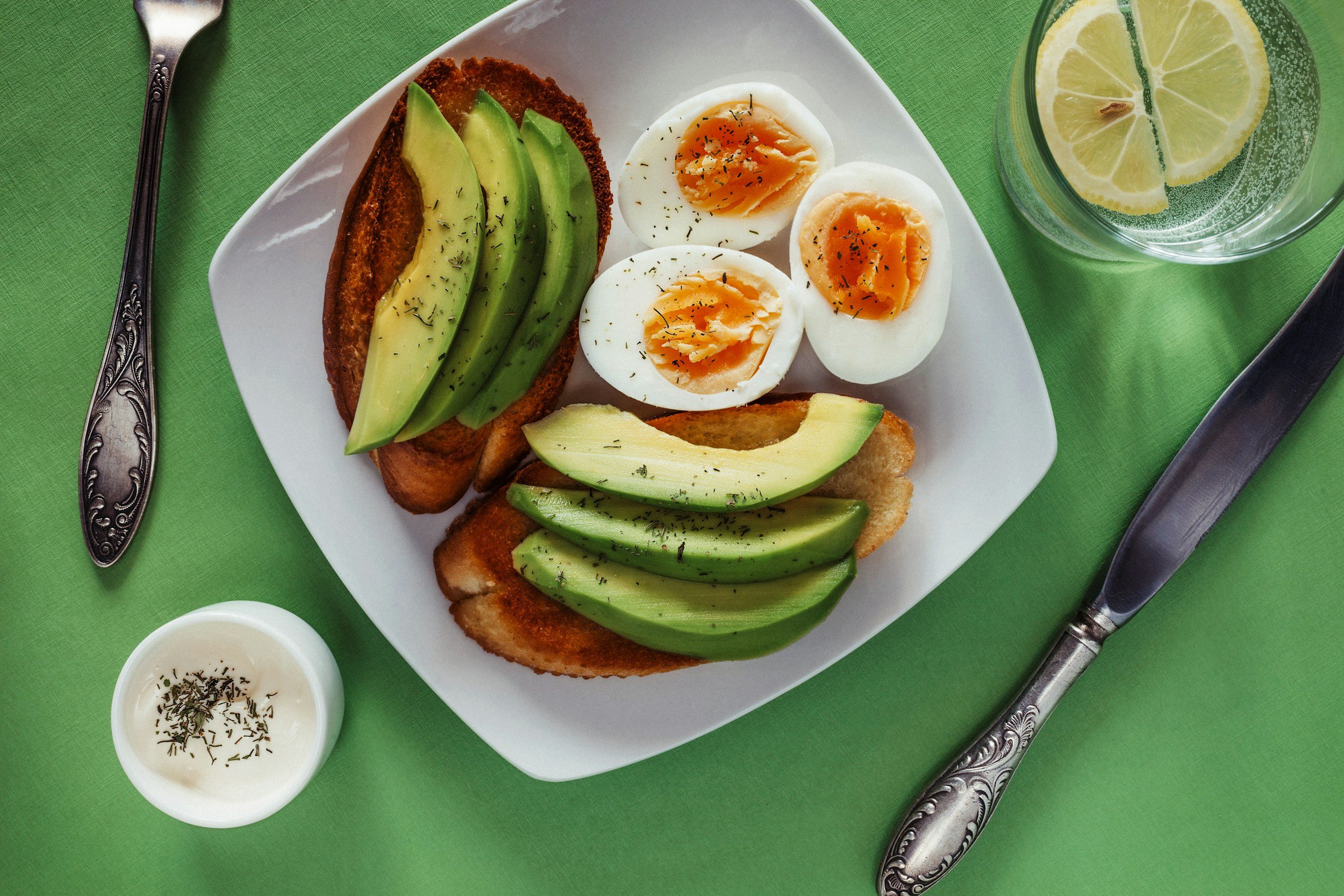
Best Breakfast to Stop Sugar Cravings
If you wake up determined to “eat better today,” only to find yourself craving sugar by 10 or 11 a.m., you’re not lacking willpower.
You’re missing metabolic support.
For many women in their late 30s, 40s, and early 50s, sugar cravings don’t start with dessert, they start with breakfast. Or more accurately, with what breakfast fails to provide.

Why Sugar Cravings Get Worse After 35 (And How to Calm Them Without Dieting)
If you’ve noticed that sugar feels harder to resist now than it did even a few years ago, you are not alone. Many women in their late thirties and early forties begin to feel as though they have lost control over their eating. Foods they once enjoyed casually now feel irresistible, cravings seem louder, and the urge to reach for sugar becomes almost urgent, especially during stressful moments, at night, or when energy dips.
The truth that most women are never told is simple: sugar cravings after 35 are not a willpower problem. They are a biological response to real changes happening in your body. Understanding these changes is the first step toward resolving cravings without shame, without restriction, and without jumping on yet another diet that never works.

Why Winter Makes You Crave Comfort Foods and How to Stop the Seasonal Weight Gain Spiral in Perimenopause
Winter has a way of amplifying the challenges that perimenopause already brings. Blood sugar swings, fluctuating estrogen, cortisol spikes, and changing sleep patterns all collide to make cravings feel urgent and almost impossible to ignore. But the good news is that once you understand why this happens, you can respond in a way that works with your body, not against it. You can feel in control again and enjoy the season without feeling trapped by food or guilt.
GLP1 Medications Explained Simply for Women in Perimenopause
GLP1 medications are everywhere right now. It feels like suddenly everyone you know is either on Ozempic, Wegovy, Mounjaro, or talking about starting one. Weight loss that once felt impossible now looks effortless from the outside. Hunger disappears. Portions shrink. The scale moves quickly. And for women in perimenopause who have been stuck in the cycle of cravings, weight gain, fatigue, and frustration, these medications can feel like a miracle.

How to Survive the Holidays Without Gaining Ten Pounds: A Perimenopause Guide to Feeling Balanced, Confident, and In Control
The holiday season can feel emotionally complicated for many women in perimenopause. It is a time filled with joy, connection, laughter, and celebration, yet for so many women it also comes with pressure, overwhelm, cravings, disrupted routines, emotional eating, and the worry that the scale will climb by January. If you have ever walked into a holiday party feeling confident, only to walk out bloated, foggy, stressed, and frustrated with yourself, you are not alone. The holidays bring a perfect storm of sugar, alcohol, late nights, emotional triggers, and constant food availability and that storm hits even harder when your hormones are shifting.
The Blood Sugar & Mood Connection
For many women in perimenopause, the emotional shifts can feel just as overwhelming as the physical ones. One moment you feel fine and the next you feel anxious, snappy, exhausted, or on the edge of tears for no clear reason. You may notice that your tolerance is lower, your mood changes faster, and your energy feels unpredictable. You might even wonder if something is wrong with you.
If this sounds familiar, I want you to know this right now. You are not broken. You are not weak. You are not losing control. What you are experiencing is a very real physiological connection between your blood sugar, your hormones, your nervous system, and your brain chemistry.
For many women, mood issues in perimenopause are not only emotional. They are metabolic.

From Stress to Stability: How Calming Your Nervous System Can Help You Balance Blood Sugar and Lose Weight Naturally
Stress is sneaky. It does not always look like panic attacks or deadlines. It is also the endless to do list, the nightly scrolling or the I will relax when everything is done mindset.
When stress becomes your baseline, your body does not know the difference between a tiger chasing you and a traffic jam. It reacts the same way by releasing cortisol and glucose into your blood for quick energy.
Eat with Intention: The Mindful Eating Blueprint for Better Blood Sugar, Better Digestion and a Calmer Mind
In a world that rewards multitasking, meals have become another task on the list, something to check off while driving, scrolling or watching television. But your body digests best when you are present, calm and aware.
Mindful eating is not about being perfect. It is about reconnecting with food and your body’s natural signals, hunger, fullness, satisfaction and gratitude. When you do, you balance blood sugar, reduce overeating and calm your mind.
Why You Keep Craving Sugar (and How to Finally Feel in Control Again)
You wake up promising yourself, today will be different. You’ll drink more water. Eat better. Skip the afternoon treats. But then, the 3 p.m. crash hits. You’re tired, foggy, and stressed, and suddenly that muffin or chocolate bar feels non-negotiable.
Sound familiar? You’re not broken or undisciplined, you’re just caught in a pattern your body’s been trained to repeat. The truth is, those cravings are not a lack of willpower… they’re a message from your body saying, “I’m out of balance and I need help.”
Let’s unpack what’s really happening and what you can start doing today to feel more in control.

Perimenopause, Sugar Cravings, and the Emotional Roller-Coaster. What’s Really Going On???
Maybe you’ve found yourself Googling things like “why do I crave sugar during perimenopause?” or “how to stabilize blood sugar over 45.” If so, you’re not imagining things. Those cravings, mood swings, and energy dips are very real, and they tend to hit harder during perimenopause.
You might be asking yourself: “Why can’t I control my sugar cravings like I used to? Why does one chocolate bar turn into the whole box?” The answer isn’t that you’ve lost discipline, it’s that your body is going through a transition. Hormones are shifting, energy levels are changing, and your system is trying to find its new balance.